Snakes live in many parts of Spain, from dry Mediterranean hills to northern forests and mountain areas. Most encounters are brief: the animal retreats when it has space. Spain also has venomous vipers, so hikers should avoid handling any snake and know what to do after a bite. This guide separates practical safety advice from common myths.
Are there dangerous snakes in Spain?
Yes. Venomous vipers occur in parts of Spain, although a normal tourist is unlikely to have a close encounter. The presence of snakes does not make a beach resort or national park broadly unsafe. Risk rises when people step close to a hidden snake, put a hand into a crevice or attempt to pick one up.
Most other snakes are not medically dangerous to people. Some non-vipers may bite if handled, and species identification by a frightened visitor is unreliable. The practical rule is therefore simple: observe from a distance, leave the animal an escape route and seek medical help if a bite occurs.
The Spanish environment ministry’s reptile inventory lists Vipera aspis, Vipera latastei and Vipera seoanei. Their ranges are not identical, and local habitats matter more than a countrywide number of snakes.
Stay near a hiking area
Choose accommodation near the trailhead you will actually use and check how you will get back after a longer walk.
The three Spanish vipers
Asp viper
Vipera aspis occurs in parts of northeastern Spain. Like other vipers, it should be treated with caution and left alone. A photograph or one head-shape rule is not enough to make safe decisions about a snake beside a trail. The right response is to step back and let it move away.
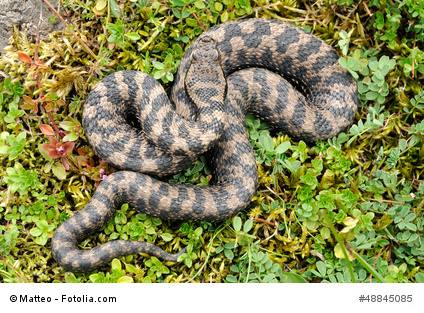
Vipers can remain still when relying on camouflage. Look where you put your hands while sitting on rocks or climbing over fallen material. Closed shoes reduce the chance of a bite when walking in vegetation.
Lataste’s viper
Vipera latastei, often called the snub-nosed or Lataste’s viper, is associated with a range of Iberian habitats, including rocky areas and scrub. The Spanish national parks authority describes it as preferring to escape when threatened, but it can bite if cornered. Do not interpret that tendency to retreat as permission to approach.
The small animal can be difficult to spot among stones and low plants. Stay on paths and watch where you rest a hand during a hike. If you see a viper beside a track, give it space and wait; you do not need to move it for other walkers.
Seoane’s viper
Vipera seoanei is associated with the northwestern part of the Iberian Peninsula. Its range reminds travellers that snakes are not only a feature of hot, dry southern Spain. A damp green landscape can still support reptiles, although the chance of seeing one depends on weather and habitat.
Do not attempt to distinguish the three vipers during a medical emergency. A clinician needs information on the circumstances and symptoms; delaying care in order to photograph or catch the animal is a mistake.
Common non-viper snakes
Spain also has several harmless or much less concerning snake species. The Aesculapian snake is a slender species found in suitable northern habitats. Water-associated snakes may be seen near ponds and streams. Some larger snakes can appear intimidating simply because of size, but they usually try to avoid people.
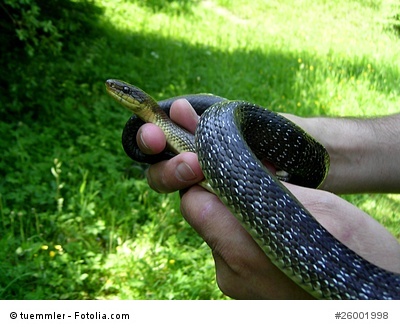
A name like “grass snake” is sometimes used loosely for different European species. Regional identification can be complex, and a guide’s old photograph might be mislabelled. Treat images as an introduction to diversity rather than a field test for whether a bite needs medical attention.
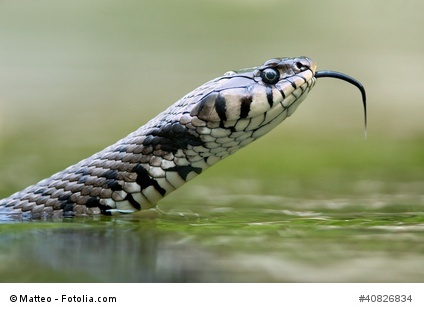
Even a non-venomous bite can break skin and require cleaning or assessment. The easiest way to avoid one is never to handle a snake.
Where might you see snakes?
Suitable places include stony ground, scrub, woodland edges, old walls and areas near water. Snakes need shelter and prey, so their distribution does not follow tourist boundaries. An urban park may have fewer encounters than a quiet trail, but there is no universal “snake-free” resort.
During warm weather, a snake may bask in the sun or shelter when conditions become too hot. Encounters vary by season and time of day. Rather than memorising one “snake season”, use common hiking care whenever you walk through habitat where you cannot see your feet clearly.
In protected areas, stay on marked routes. Our guide to Spain’s national parks covers different landscapes, but park staff are best placed to advise about a specific local trail.
What to do when you see a snake
Stop, keep a sensible distance and let the snake move away. Do not strike it, throw stones or try to push it off the path with a stick. If it is partly hidden, give the area a wide berth rather than stepping over it.
Keep children and dogs back. A curious dog may approach even when the snake is trying to leave. On a narrow route, wait until the animal has moved or turn around if necessary. A close-up photograph is not worth provoking a bite.
If a snake enters accommodation or a busy enclosed area, ask the property or local wildlife authority for appropriate help. Do not attempt to capture it in a box without training.
First aid after a suspected bite
Move a short distance away from the snake to avoid a second bite. Call 112 if symptoms are serious, the snake may have been venomous or safe transport is uncertain. Keep the person calm and as still as possible; support and immobilise the bitten limb. Remove rings, bracelets or tight clothing before swelling develops.
Arrange prompt medical assessment. Do not make the person walk a long distance if transport can be arranged. Note the time of the bite and describe symptoms. A photo from a safe distance may help, but never try to catch the animal and do not delay care for identification.
Do not cut the wound, suck out venom, apply a tight tourniquet, use electric shocks or put herbal remedies on the bite. The World Health Organization’s snakebite guidance emphasises immobilisation and rapid access to medical care.
What treatment may involve
Medical professionals assess the symptoms, the wound and possible signs of envenoming. They may observe the patient and provide supportive treatment; antivenom is used when clinically indicated and appropriate. You cannot decide the need for antivenom solely from the appearance of two punctures or the absence of immediate pain.
Infection prevention, tetanus status and other complications may also be considered. Tell clinicians about medicines and conditions that could matter to treatment. This is another reason not to dismiss an uncertain bite as harmless based on an internet photograph.
If symptoms such as breathing difficulty, faintness or rapid swelling occur, call emergency services immediately and follow their instructions. The advice here is first aid, not a substitute for professional care.
Reducing the chance of a bite
Wear closed shoes on rocky or overgrown trails. Watch where you step, especially when climbing over a stone wall or reaching into vegetation. Use a light when walking after dark. Keep children on the path and dogs under control where required.
Do not place a hand blindly under a log or into a gap between rocks. A snake may be there for shelter rather than seeking contact with people. If you sit on the ground for a picnic, inspect the spot first and shake out clothing or gear left outside.
These simple habits also help avoid other minor trail injuries. They do not require fear of every rustle in the grass.
Explore Spain’s nature with a guide
A guided walk can help you understand local habitats and wildlife while following park rules. Choose a route that suits your fitness and check the meeting point.
Snakes at the beach and in cities
A busy sandy beach is not the setting most travellers associate with snakes, but dunes, rocks and scrub near a beach can support wildlife. Do not walk into protected dunes or move stones in search of an animal. The chance of an encounter is generally small, and normal awareness is enough.
In towns, green spaces and stone structures can provide habitat. A snake seen in a garden should not automatically be treated as an emergency if it can leave undisturbed. Keep your distance and seek local advice when it is trapped in a place people must use.
Calm behaviour protects both visitors and wildlife. Attempting to kill or pick up an unfamiliar snake can create the very danger you were trying to avoid.
Why snakes matter in the ecosystem
Snakes are predators and prey within Spanish ecosystems. They feed on small animals and are themselves eaten by birds and other wildlife. Seeing one on a hike is evidence of a living habitat, not a sign that the area has been poorly managed.
Do not disturb or collect reptiles in protected areas. Even outside a park, observing from a distance is the most respectful approach. For other wildlife, see our birds of Spain guide.
Stay near a hiking area
Choose accommodation near the trailhead you will actually use and check how you will get back after a longer walk.
Snakes in other travel destinations
Our country guides cover different species and local conditions. Use the advice for the place you are visiting; a snake common in one country may be absent in another.
Planning a hike in snake habitat
Before walking, choose a route suitable for your group and tell someone when you expect to return if you are heading into a remote area. Save a map offline and note where road access or a staffed visitor centre is located. These precautions help with many outdoor incidents, not only snakes. An emergency call is more useful when you can describe your location precisely.
During the walk, let the first person in the group see where everyone is stepping, and avoid reaching across bushes to retrieve an object. If you spot a snake, tell the group calmly and allow space. There is no need for everyone to crowd around to inspect it. A photo from a safe distance can be useful for a personal wildlife record, but never change the animal’s behaviour just to obtain one.
If travelling with a dog, follow local leash rules and prevent it from investigating rocks or dense vegetation. Veterinary care after a suspected bite is urgent; ask a local veterinarian or emergency service rather than assuming human treatment advice applies to pets.
Understanding risk without exaggeration
Many travellers never see a snake during a Spanish holiday. Others might notice one briefly on a quiet trail. A sighting should prompt respectful distance, not panic. Claims that one entire province is “full of deadly snakes” are unhelpful without evidence. Habitat, weather, human behaviour and access to medical care all matter to risk.
Likewise, a regional viper listing does not tell you how many animals occupy a particular campsite. Ask park staff about local wildlife if you have a specific concern. Staying on marked paths and taking ordinary hiking precautions is a more useful response than trying to avoid every natural area.
Frequently asked questions
Are there venomous snakes in Spain?
Yes. Three native viper species are listed in Spain’s reptile inventory. Avoid handling any snake and seek medical attention after a bite.
Should I carry a snakebite kit?
Cutting or suction devices are not recommended. A phone, knowledge of 112 and a sensible hiking plan are more useful.
Will a snake chase me?
Snakes generally try to avoid people. Give one space to escape and do not provoke it.
Can I identify a safe snake by its pupils or head?
Do not rely on one visual rule. Light, distance and species differences make quick identification uncertain.