Welcome to Spain-Guide.info, an independent travel guide for visitors who want to discover Spain at their own pace. Whether you are planning a beach holiday on the Mediterranean coast, a city break in Barcelona, a road trip through Andalusia or a visit to the Spanish islands, our guide provides practical information to help you organise your journey.
Spain is one of Europe’s most popular holiday destinations, and it is easy to understand why. The country offers an extraordinary variety of landscapes, historic cities, beaches, mountains and islands. You can spend your holiday in a lively coastal resort, explore traditional villages, discover impressive architecture or travel through regions that receive relatively few international visitors.
Our website focuses particularly on independent travel, coastal destinations, cities and practical holiday information. We explain what to expect at popular destinations and provide useful tips about transport, prices, attractions and everyday life in Spain.
Unlike many commercial travel websites, Spain-Guide.info is an independent project. Our aim is to provide accessible information that helps visitors plan their holidays and explore the country.
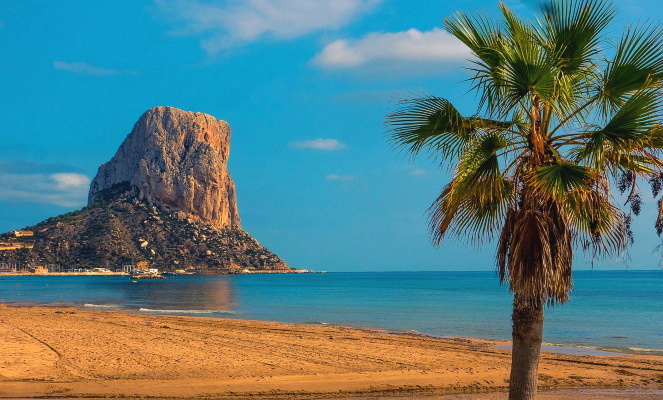
Explore Spain – Popular Destinations and Travel Regions
Spain is much more than a single holiday destination. Its Mediterranean coastline stretches for hundreds of kilometres, while the Atlantic coast offers completely different landscapes and weather conditions. The Balearic Islands and Canary Islands are also among Europe’s best-known holiday regions.
For first-time visitors, choosing the right destination can be one of the most important decisions. Some regions are famous for beaches and nightlife, while others are better suited to sightseeing, hiking or exploring historic towns.
The Mediterranean Coast of Spain
The Mediterranean coast is particularly popular with international holidaymakers. It includes several famous coastal regions, each with its own character.
- Costa Brava: A varied coastline in northeastern Spain, known for rocky cliffs, picturesque bays, fishing villages and popular seaside resorts.
- Costa Daurada: Sandy beaches, family-friendly resorts and the historic city of Tarragona.
- Costa Blanca: One of Spain’s most established holiday regions, with well-known destinations such as Benidorm, Calpe, Altea and Alicante.
- Costa Cálida: A relatively dry and sunny coastal region around Murcia and Cartagena.
- Costa del Sol: Famous for its beaches, resorts, golf courses and attractive towns along the coast of Andalusia.
Our detailed guide to the coasts of Spain explains the different coastal regions and helps you decide which part of the country is most suitable for your holiday.
If you are interested in the Costa Blanca, you can start with our guides to Benidorm and Calpe. These destinations are popular with visitors looking for beaches, restaurants, coastal scenery and a well-developed tourist infrastructure.
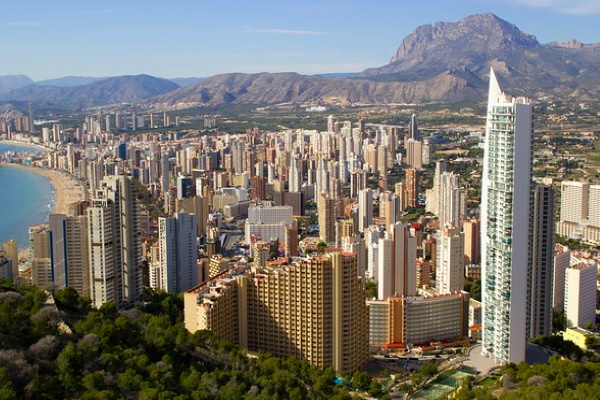
Benidorm – One of Spain’s Best-Known Holiday Resorts
Benidorm is famous for its skyline, long sandy beaches and large selection of hotels, restaurants and entertainment venues. It is one of the most developed tourist destinations on the Mediterranean coast.
The town is particularly popular with British and other European holidaymakers. Its beaches, promenade and extensive tourist facilities make it a convenient destination for visitors who prefer to have everything close at hand.
Read more in our Benidorm travel guide.
Spanish Islands – Mallorca, Ibiza and the Canary Islands
Spain’s islands are among the country’s most popular holiday destinations. They offer a wide range of experiences, from lively seaside resorts to quiet villages, mountain landscapes and spectacular natural scenery.
The Balearic Islands
The Balearic Islands are located in the Mediterranean Sea, east of mainland Spain. The best-known islands are Mallorca, Menorca, Ibiza and Formentera.
Mallorca is especially varied. While some coastal areas are dominated by large holiday resorts, the island also has beautiful mountain scenery, historic towns, small villages and quieter beaches. Palma, the island’s capital, is an interesting destination for sightseeing and shopping.
Ibiza is internationally known for its nightlife, but visitors can also discover traditional villages, attractive beaches and quieter parts of the island. Nearby Formentera is particularly famous for its clear water and sandy beaches.
Menorca is generally quieter than Mallorca and Ibiza. Its numerous coves and attractive natural landscapes make it an appealing destination for visitors who prefer a more relaxed holiday.
The Canary Islands
The Canary Islands are located in the Atlantic Ocean, off the northwestern coast of Africa. Their mild climate makes them popular throughout the year.
Tenerife, Gran Canaria, Lanzarote and Fuerteventura are among the best-known islands. Each offers a different combination of beaches, volcanic landscapes, hiking opportunities and tourist resorts.
The Canary Islands are particularly interesting for visitors looking for sunshine outside the main Mediterranean summer season.
City Breaks in Spain
Spain has some of Europe’s most interesting cities. Historic buildings, museums, markets, restaurants and lively neighbourhoods make Spanish cities excellent destinations for short breaks.
Barcelona
Barcelona combines impressive architecture, Mediterranean beaches and a vibrant cultural scene. The city is particularly famous for the buildings of Antoni Gaudí, including the Sagrada Família and Park Güell.
Visitors can explore the Gothic Quarter, walk along the waterfront, visit museums or enjoy views over the city from its surrounding hills.
Our Barcelona travel information provides an introduction to this fascinating city.
If you are planning to visit Park Güell, our article about photography in Park Güell may also be useful.
Valencia
Valencia is one of Spain’s most attractive Mediterranean cities. It combines an interesting historic centre with modern architecture, beaches and excellent food.
The City of Arts and Sciences is among its best-known attractions. Visitors can also explore the old town, local markets and the extensive green spaces of the former Turia riverbed.
Find out more in our Valencia travel guide.
Seville
Seville is one of the cultural highlights of southern Spain. The capital of Andalusia is famous for its historic architecture, lively squares, traditional neighbourhoods and flamenco culture.
Major attractions include Seville Cathedral, the Royal Alcázar and Plaza de España. The city is particularly enjoyable in spring and autumn, when temperatures are generally more comfortable for sightseeing.
Read our Seville travel information.
Practical Travel Information for Spain
Planning an independent holiday involves more than choosing a destination. Questions about transport, prices, opening hours and local customs can be just as important.
Our travel guide includes articles covering many of these everyday topics.
Spain Travel Planning – Useful Guides
- Opening hours in Spain – Information about shops, businesses and typical opening times.
- Renting a car in Spain – Useful considerations for visitors planning to explore independently.
- Postal services in Spain – Practical information about sending letters and postcards.
- Spain: Facts and figures – Geography, population and other background information.
- The coasts of Spain – An overview of the country’s major coastal regions.
Getting Around Spain
Spain has an extensive transport network, including high-speed trains, regional railways, long-distance buses, domestic flights and ferries.
For city breaks, public transport is often the easiest option. Large cities such as Madrid, Barcelona and Valencia have developed networks of buses, trains and other local transport services.
A rental car can be particularly useful when visiting smaller towns, rural areas or coastal destinations that are difficult to reach by public transport.
Before booking a vehicle, consider parking arrangements, insurance conditions and any restrictions on driving in historic city centres. Our guide to rental cars in Spain provides further information.
Shopping and Opening Hours
Opening hours in Spain can differ considerably between major cities, tourist resorts and smaller towns. Shopping centres and supermarkets in popular holiday destinations may have longer opening hours than traditional businesses in rural areas.
Some smaller shops close for several hours in the afternoon, although this is less common in large shopping centres and busy tourist districts.
For more information, see our article about opening hours in Spain.
Prices and Holiday Budgets
The cost of travelling in Spain depends heavily on the destination, season and type of accommodation. Popular seaside resorts and major cities can be considerably more expensive during peak holiday periods.
Visitors travelling independently can often reduce their expenses by comparing accommodation, using public transport and eating in restaurants away from the busiest tourist areas.
It is worth planning ahead during the summer months, especially when travelling to popular islands or coastal resorts.
Nature, Wildlife and Outdoor Activities
Spain offers much more than beaches and historic cities. Its varied geography includes mountain ranges, forests, wetlands, volcanic landscapes and extensive protected natural areas.
The Pyrenees form a natural border with France, while the Sierra Nevada in Andalusia contains some of mainland Spain’s highest mountains.
Hiking is popular in many parts of the country. Visitors can discover coastal walking routes, mountain trails and national parks with very different landscapes.
Spain’s coastal waters are also home to a wide variety of marine animals. Visitors interested in the natural environment can read our article about sharks in Spain.
Beaches and the Sea
Spain has beaches on both the Mediterranean Sea and the Atlantic Ocean. Conditions vary considerably depending on the region.
The Mediterranean coast is especially popular for swimming and traditional beach holidays. Along the Atlantic coast, visitors may encounter stronger waves, more noticeable tides and different weather conditions.
Before swimming, pay attention to local warning flags, currents and weather conditions. Beaches with lifeguards can be a particularly good choice for families.
Art, Culture and Museums
Spain has a rich cultural heritage shaped by Roman, Islamic, medieval and modern European influences. Its architecture, art and traditions reflect the country’s long and varied history.
Famous cultural attractions include the Prado Museum in Madrid, the Alhambra in Granada, the Sagrada Família in Barcelona and numerous historic cathedrals, castles and palaces.
Visitors interested in painting and sculpture can explore our guide to art museums in Spain.
Spain is also known for its regional traditions, festivals and distinctive cuisine. Different regions have their own specialities, from seafood dishes on the coast to traditional stews and tapas.
Discover Smaller Towns and Coastal Resorts
Some of the most enjoyable experiences in Spain can be found outside the largest cities and most famous holiday resorts.
Smaller coastal towns often provide an interesting combination of beaches, traditional streets, local restaurants and everyday Spanish life.
One example is Torre del Mar, a seaside town on the Costa del Sol in Andalusia. It is an interesting alternative for visitors who prefer a coastal destination with a more local atmosphere.
Other towns along the Mediterranean coast offer similar opportunities to explore markets, promenades, historic centres and nearby natural attractions.
Map of Spain
Spain occupies most of the Iberian Peninsula in southwestern Europe. It borders Portugal, France and Andorra, and has coastlines on both the Mediterranean Sea and the Atlantic Ocean.
The country also includes the Balearic Islands in the Mediterranean and the Canary Islands in the Atlantic, as well as the autonomous cities of Ceuta and Melilla in North Africa.
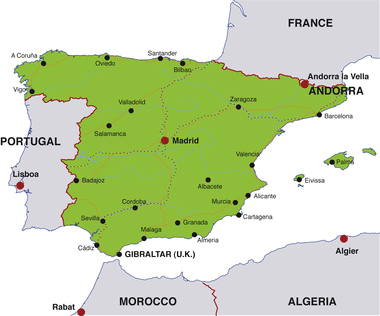
The geography of Spain helps explain its regional diversity. Northern Spain is generally greener and wetter than much of the Mediterranean coast, while the interior includes extensive plateaus, mountains and agricultural landscapes.
Although the largest cities attract many residents, there are also extensive rural areas with relatively low population density.
When Is the Best Time to Visit Spain?
The best time to visit Spain depends on your destination and the activities you are planning.
Spring
Spring is an excellent season for sightseeing, walking and exploring historic cities. Temperatures are often comfortable, particularly in southern Spain, where summers can become extremely hot.
Summer
Summer is the main holiday season along much of the Mediterranean coast and on the Balearic Islands. Beaches and resorts are busy, and accommodation prices can be higher during school holidays.
Visitors planning sightseeing trips to inland cities should be prepared for high daytime temperatures.
Autumn
Early autumn can be a very attractive time for a holiday in Spain. In many Mediterranean destinations, the sea remains warm after the summer months, while temperatures gradually become more comfortable.
Winter
Winter conditions vary greatly across Spain. Mountain regions can experience snow and freezing temperatures, while parts of southern Spain and the Canary Islands often remain comparatively mild.
The Canary Islands are particularly popular with travellers seeking a winter break in a relatively warm climate.
Spain for Independent Travellers
Travelling independently allows you to discover Spain beyond the standard tourist routes. Instead of spending your entire holiday in one resort, you can combine beaches with city visits, explore smaller towns or travel through several regions.
Spain is well suited to this type of holiday thanks to its extensive transport infrastructure, wide choice of accommodation and large number of interesting destinations.
However, independent travel also requires some preparation. Transport connections, parking facilities and opening hours can vary between regions. During busy holiday periods, popular attractions may require advance reservations.
Our practical guides are intended to help you make these decisions before and during your journey.
Excursions and Activities in Spain
Spain offers an enormous variety of excursions, from guided city walks and museum visits to boat trips, nature experiences and day tours.
In major tourist destinations, organised excursions can be a convenient option when you do not want to arrange every part of your trip independently.
About Spain-Guide.info
Spain-Guide.info is an independent travel information project created for people who enjoy discovering destinations on their own.
Our focus is on useful, understandable information about Spanish holiday regions, cities, attractions, transport and everyday travel questions.
We regularly expand and update the website as new information becomes available. However, opening hours, prices, transport services and local regulations can change. We therefore recommend checking important details with the relevant provider before travelling.
We hope our guides help you discover interesting places, plan enjoyable excursions and make the most of your time in Spain.
Enjoy exploring Spain!